In this video lesson, students will achieve the following learning objectives: 1) Become familiar with the fourth state of matter, “plasma"; 2) Understand the concept of plasma: 3) Compare the four states of matter; and 4) Learn some applications of plasma. Before starting this video lesson, students should have knowledge about: 1) The three states of matter - solid, liquid, and gas - and the properties of each state and how matter can change from one state to another; 2) The structure of the atom - what does it consist of, and what are the properties of each component; 3) How a neutral atom becomes an ion; and 4) The basics of conduction of electricity. No materials are needed for this lesson other than playing the video module. A worksheet for segment 3 can be downloaded from this web page. The types of in-class activities suggested for the breaks between video segments include small group discussions and worksheet completion.
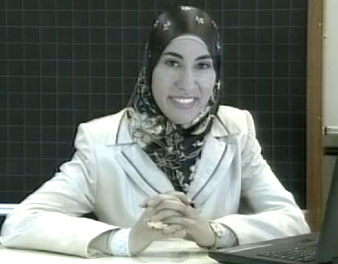
Amaal Jalal AL- Hammoury has been a high school physics teacher in Jordan for nine years. She believes in self-learning and team work.
This site, provided by the Coalition for Plasma Science, is designed by teachers for teachers.
http://www.plasmacoalition.org/edu-nature.htm
This site, provided on the World Wide Web Virtual Library, is designed to increase public awareness and understanding of the plasma sciences and their many applications and benefits to society.
http://www.plasmas.org/resources.htm
This article, available on the How Stuff Works website, provides an in-depth explanation of how fluorescent lights work.
http://home.howstuffworks.com/fluorescent-lamp.htm
This article from New Scientist magazine reports on a revolutionary plasma rocket tested in Costa Rica.
http://www.newscientist.com/article/dn12064-plasma-rocket-breaks-endurance-record.html
| Title | Language | Format | |
|---|---|---|---|
| Plasma: The Fourth State of Matter (Arabic, QuickTime) | Arabic | Quicktime | Download |


thanks
thanks